

That heading may have thrown you a curve ball whanau but rest assured we speak of a single identity here, and when it comes to one of my favourite topics, rugby league, this bloke sits squarely in the category of unsung hero from a bygone era that certain millennials refer to as boomers.
The Second World War had just about run its course when on 25 April 1945, while travelling back from Cambridge in his mothers womb, Billy Boy Raihe decided it was time to make his grand entrance. Birth certificate records show Ngaruawahia as place of birth but more specifically it was his grandmothers residence where the event took place. Common among Maori of that era, home births were as safe and well practised as maternity hospital deliveries. With a whangai sibling already in the Raihe household at Waahi Paa, young Billy Boy soon fell into line and settled into the lifestyle of the time. School, after school, eat, sleep, repeat.
Huntly West, as the area became known, included a newly opened primary school (est. 1956) but it was to the well established Rakaumanga Native School (est. 1896), about two miles north of Waahi Paa in an area near the Huntly Power Station switchyard today, that the Raihe whanau of sister Ami and younger brothers Warren and Douglas attended daily lessons. Rakaumanga was a hot spot of whangai children which helped make regular attendance a breeze. Whanau names at Waahi Paa such as Haunui, Tomo, Raumati, Rawiri, Wanakore, Waikai, Morgan, Muru, Punakai and Wilson combined with Raihe to foster a friendly peaceful environment for tamariki to prosper. Interwoven into that fabric at the time was the sport of rugby league which is the topic of this bio.
Let me pose a simple question. Who is the one individual who has patronised Davies Park the most over its 85 year history?
Officially opened on Saturday 3 July 1937 with a curtain raiser between Ngaruawahia and Pukemiro and a main game of Huntly v Huntly South, Davies Park is not only a sports venue but more importantly a place where friendships and lifelong memories have been formed. William Pop Raihe would sit head and shoulders above any other living mortal in the number one spot. From the twinkle in his Dads eye back in 1945 to the old kaumatua who now sits in the grandstand following the fortunes of his beloved Taniwharau, he is the epitome of dedication to rugby league. Others may receive awards for unsung hero but let me rewind the clock.
I have used the line running around in my old mans ball bags before to illustrate the length of association I have had with Davies Park and the same principle applies to Pop and many others as we move along the whakapapa lineage. Born to Maori parents Piroi Bill Raihe Snr and wife Tuhimanu Tupaea, father Bill was one of the pioneers of the first all Maori team in the area in the 1930s named Kia Ora (see photo), followed by the establishment of the Taniwharau team in 1944. A regular through the Davies Park gates along with his good mate King Koroki Mahuta, Bill often had young William hitch a ride in the back seat of the black car, the symbol of royalty back in the day. Sometimes those games involved international teams. The 1955 match between NZ Maori and France (see photo) attracted a near record crowd which included ten year old Billy Boy. King Koroki remained a regular spectator at Davies Park for many years, following the playing exploits of his friends son as he moved into senior ranks.
The blue and white of Huntly United was Pops first foray into junior rugby league (see photo) and Huntly College soon became a familiar haunt. The three Rs, rugby league and sheilas seemed to be superseding the school and after school timetable of his childhood. It soon became apparent that future employment needed serious consideration. Good money was being made at the freezing works and in underground mining but a trade training apprenticeship was the preferred parental persuasion.
The Department of Maori Affairs launched a nation wide Maori Trade Training Scheme in 1959 and many of his Huntly College mates had been approached to enrol. A couple of years later Pop and Ernest Maru were seconded to the Maori Boys Hostel in Dominion Road, Auckland, and a five year 10,000 hour carpentry apprenticeship began. Sport also followed him north when a chance meeting with Clarry Whaanga from the Manukau Rugby League Club saw Pop and college mate Clyde Mook Tupaea (see photo) turn out in the Auckland competition for a short time.
On the job training took him to construction sites in Auckland, Hamilton and Te Kuiti. A dabble on the dark side occurred while living in Hamilton when Doug Pene of the newly formed Melville Rugby Club invited him to sign up. Mahi and hakinakina were now big parts of his life. Work contracts were compulsory for apprentices but when he was told he had a contract in Waitara he put his foot down and refused to go. Fortunately Max Fletcher Builders in Huntly had a vacancy and foreman Sam Scobie Ponga convinced the powers that be that Pop could complete his time in Huntly. Once out of his time and free of the powers that be the meagre apprentice wage needed fixing, so off to the State Coal Mine office in Rotowaro he went and a lifetime in underground mining followed. That was until a certain surplus to requirement letter arrived and half of Huntly went into mourning. Thankfully Winnies Gold Card arrived at the same time.
I coined the title Taniwharau Man of Steel to illustrate the many hats this gentleman has worn in the game of rugby league in the Waikato. Pop has been a shining light for no reason other than his dedication to a sport that many have taken part in, from whipper snapper spectator to schoolboy player to senior player to coach to administrator and beyond.
Through the 1970s Pop led a crash hot Taniwharau senior team as player coach. Previous coach, ex NZ Maori Bill Paki, along with 1959 NZ Schoolboy Kiwi John Hona approached Pop to take on the role in the mid 60s. In a two horse race with future 1970 Kiwi Don Parkinson, Pop won a 13 to 11 vote and began a coaching career that eventually covered all grades for what seemed like a thousand years. The 1970s senior team went on to surpass Ngaruawahias record of six consecutive championships from 1963 to 1968 and set a new Waikato Rugby League record of seven from 1971 to 1977. It is a record that will be very hard to beat.
Outside footy Pop has for years been the main maintenance man at Waahi Paa and the main designer, architect, draftsman and builder at the Taniwharau Club House which could be pulled down soon, ouch. He worked for years at various royalty residences including Turangawaewae and other marae and married Joyce Teparu (deceased). They raised three children, Tana, Moeroa and Tania, and he is now Koro to all his mokopuna.
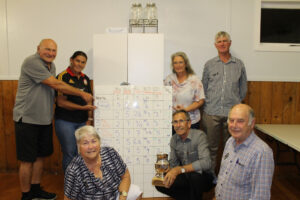
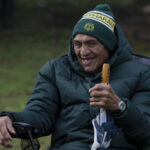
They say a picture speaks a thousand words and the enclosed montage speaks volumes about the man we all know as Pop. Of all the individuals who have come through the playing ranks of the famous Taniwharau Rugby League Club from Kiwis to Kiwi triallists to NZ Maori reps to Waikato provincial players, William Pop Raihe sits at the top as the most deserving and humble recipient of a thousand accolades. I remember coming into senior footy as a fresh faced 16 year old on school holidays from St Stephens in 1966 with school mate and future 1969 Kiwi Trevor Patrick. Pop was player coach and his words and actions still ring true today. He led from the front and never expected anyone to do anything he could not or would not do. Everyone get in front of me he would yell as we ran up Te Kauri hill or did reps on the old Rakaumanga School field and he would be setting a cracking pace.
And as for the answer to my own question, who has patronised Davies Park the most over its 85 year history?
Well, if you have come this far in my bio you already know the answer.
Oh, and that name Billy Boy Raehi, that is the name on his birth certificate and his NZ drivers licence. Just thought I would clear that up.
Researched by Rex Hohaia
8 December 2022
Footnote: Nephew Willie Rangi told me he was proud to be named after Pop William and that Pop first played senior football at age 12. I asked Pop for the inside bully and he said he used to travel with the players and one day the Chief Charlie Mahuta took his bus to Putaruru for a game. The team was short and captain Sati Toka told him to put on a jersey and stand on the wing. He told the players not to pass the ball to Pop but Pop being a tautohe ran straight into the action and called for the ball anyway. After the game Sati told him not to tell his old man. Word soon got around to Piroi and after a korero both Sati and Pop were told never to do that again.