

While I have written and published individual biographies of Taniwharau’s seven New Zealand Kiwi representatives, the following is a condensed version — along with the remaining Waikato/Kiwi players I have been able to research — plus a couple of additions to the Taniwharau total, giving nine Kiwi internationals in all.
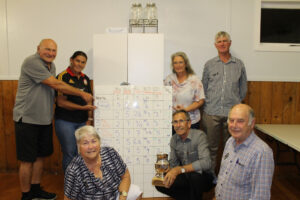
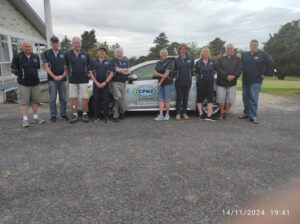
The Taniwharau Rugby League Football Club (est. 1944) was founded by Tonga Mahuta — more out of frustration than “third time lucky” — and has nine Kiwis who all wore the green and gold at senior level, which is a difficult criterion to fulfil in this day and age. Many current New Zealand Kiwi players have gone from schoolboy or junior status in Aotearoa regions to the bright lights of Sydney or Brisbane, then into NRL or UK Super League clubs and on to Silver Fern or Kiwi selection.
The first Kiwi from the Taniwharau Club was Andrew “Nuki” Berryman (1951–52), followed by Don Parkinson (1968), Trevor Wharetapu Patrick (1969–70; NZ Schoolboy Kiwi 1962), Wiremu Hira (Rick) Muru (1980; NZ Schoolboy Kiwi 1963–65), Lance Koro Hohaia (2002–11; NZ Junior Kiwi 2001), Dane Wairangi Manuera Koopu (2004–05; NZ Junior Kiwi 1998) and Louis Manu Anderson (2004–06; NZ Junior Kiwi 2002–03).
Six of the nine were members of the club’s Team of the First 70 Years, selected in 2015, with Lance Hohaia — who played for the NRL Warriors and the UK Super League’s St Helens — awarded Player of the First 70 Years. Trevor Patrick, who represented the New Zealand Schoolboys in 1962 and played centre while still at Te Kauwhata College in 1966–68, missed selection (go figure — ouch!) but was later picked for the Kiwis while playing for Otago University, also representing New Zealand Universities.
Louis Anderson is another unique case — he played part of the 2002 season for Taniwharau as a 17-year-old before heading to the NRL Warriors and the UK Super League. Returning from France in 2020, he was persuaded by his old Church College mates to turn out for the newly formed Ravens (est. 2021) in Waikato Rugby League, travelling from Dargaville each weekend — how’s that for commitment!
Wairangi Koopu showed similar loyalty after a stellar NRL career with the Warriors and Melbourne Storm, turning out for his junior club Taniwharau — most memorably just two days after the cancellation of a Fight for Life bout when his opponent was injured.
In a history-making addition to the archives of the famous Taniwharau RFLC, two women have now worn the Silver Fern with distinction — Kiwi Ferns #154 Harata Butler (2020) and #155 Mya Hill-Moana (2020–22).
Women’s rugby league in New Zealand dates back to 1921 when a team from the Hornby Club in Christchurch formed. The first national team was chosen in 1995 and, like the men in 1908, were the first to tour overseas — a seven-match tour to Australia captained by Auckland prop Juanita Hall (#1). With the rapid growth of women’s rugby league, there will hopefully be many more Waikato wahine wearing the Silver Fern jersey in the years ahead.
Harata Charlotte Butler’s connection to the Taniwharau Club came almost by osmosis. Born in Kawakawa on 28 June 1993 (Ngāpuhi), she was raised in Hamilton by her grandparents and attended the total immersion school Te Wharekura o Rākaumanga. Fluent in te reo Māori and an all-round sportsperson, she soon became central to the kura’s waka ama academy, winning gold in a single-sculls event at the Waka Ama Nationals at Karāpiro in 2012.
Although her Wikipedia page notes junior league for Taniwharau, it wasn’t until 2021 that she actually donned the green and gold, joining the club’s women’s team. Her rugby league journey began in 2013 with the Canley Heights Dragons in Sydney, followed by various inter-state teams before returning to Aotearoa to play for the Papakura Sisters — a move that advanced her career dramatically.
After being named NZRL Domestic Female Player of the Year (2020), Butler made her Kiwi Ferns debut that same year. Her achievements include representing Auckland (2018), starring in the Māori All Stars’ victory over the Indigenous All Stars (2019), and earning MVP honours in the inaugural Sky Sport NZRL National Premiership.
A key player for Counties Manukau and now a mainstay of the 2025 NRLW Warriors, Harata Butler continues to excel as one of the country’s standout rugby league talents.
Mya Hill-Moana is true green-and-gold — following in the footsteps of her “old-school” dad, Tame Moana, a Taniwharau stalwart from the turn of the century. Daughter Mya was the first woman player from the club to be presented with a blazer.
Born in Huntly on 6 May 2002, Mya grew up in a close-knit whānau, tagging along with mum Joanne Hill and three siblings to watch her father win Waikato Rugby League championships with Taniwharau. Rugby league wasn’t initially part of her plan — she was inspired by Silver Fern netballer Laura Langman and dreamed of wearing the netball version of the Silver Fern.
But there was more brewing under the surface. Mya was also heavily involved in waka ama through the local Rāhui Pōkeka Waka Club, based at Wāhi Pā on the Waikato River, led by green-and-gold stalwart Hakopa Ngāpo. At the 2018 Waka Ama Worlds in Tahiti, she won two silver medals.
Rugby league eventually appeared on her radar through an Under-17 team formed by another stalwart, Mike Wilson. Previously, girls could only play in mixed teams until Under-12 level, leaving a gap until adulthood. The first secondary schools nines tournament in 2016 led to a progression of age-grade teams and the formation of Taniwharau’s Under-16 side in the Auckland competition.
A Mike Wilson-coached Taniwharau Under-18 Girls team — featuring current Black Fern Victoria-Rose Green and future Kiwi Fern Mya Hill-Moana — went on to dominate Auckland’s top teams.
Although waka ama participants were “off-limits” for rugby league while preparing for Tahiti, Mya’s league career began soon after her return — and the rest, as they say, is well-documented history.
Researched by Rex Hohaia – 1 September 2025