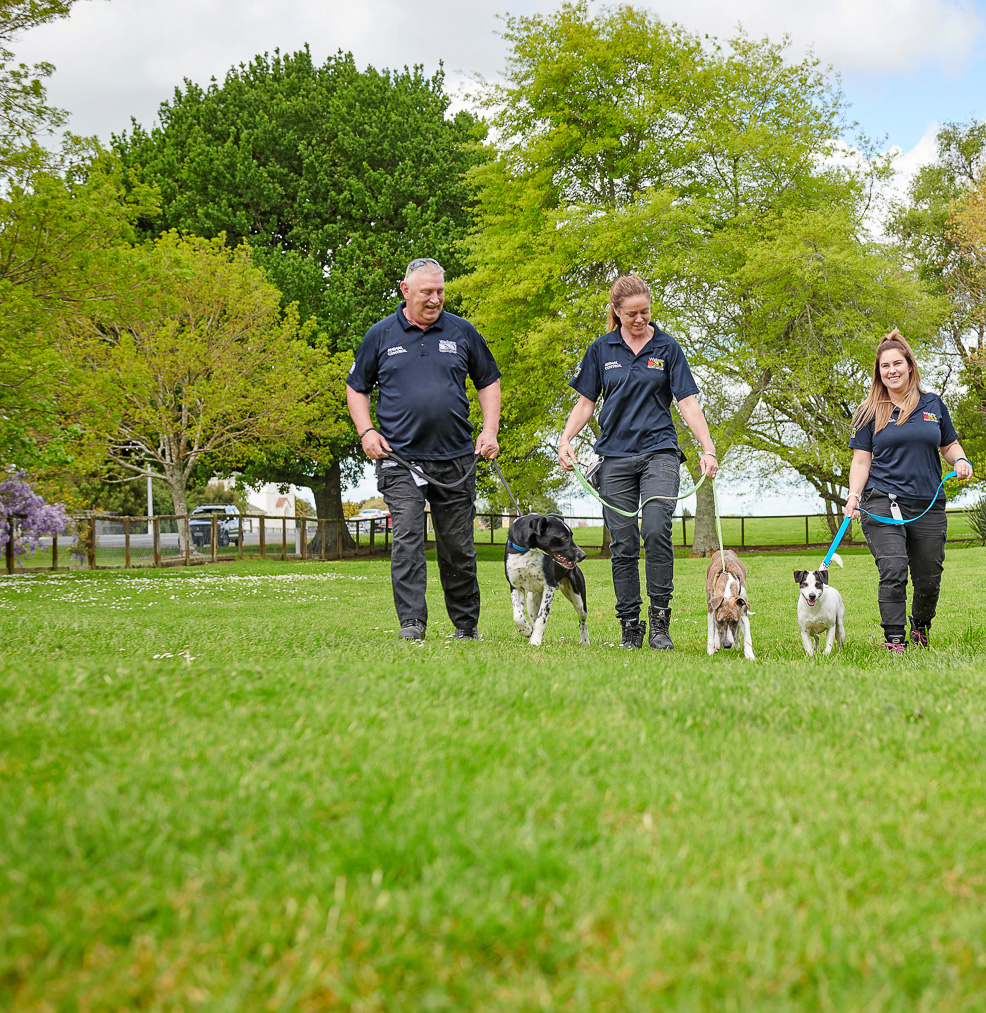
Roaming dogs, pound management and costs are top of mind around towns in the Waikato District. The Chatter sat down with the council’s Animal Control team to find answers. This time we cover what actually happens at the pound and some tips and ideas for a happy health canine companion.More coming next issue.
What does Animal Control actually do?
A council’s Animal Control team plays an important role in keeping people and animals safe. It’s not simply picking up stray dogs, there’s lots more involved.
Our responsibilities include:
Responding to reports of roaming, aggressive, and nuisance dogs.
Reuniting lost dogs with their owners whenever possible.
Protecting animal welfare by responding to welfare concerns and ensuring dogs receive appropriate care.
Ensuring compliance with the Dog Control Act 1996 and local bylaws to promote responsible dog ownership in annual dog registration renewal and microchipping requirements.
Education through school visits, events, and public awareness programmes about safe interactions with dogs and responsible ownership.
Caring for impounded dogs and, where suitable, helping find them loving forever homes through adoption.
Supporting owners with advice and information.
Responding to wandering stock complaints on public roads.
Our goal isn’t to issue fines. It’s to work together to encourage responsible dog ownership, improve animal welfare, and create a safer environment for everyone. We work on the 4 Es: Engage, Enable, Educate, and finally, Enforce.
Biggest community concerns?
Roaming dogs; Dogs that wander can be injured, lost, or pose a risk to people, livestock and wildlife
Poorly secured properties; broken fences or open gates
Lack of socialisation and training. Well-socialised, trained dogs are more confident, and less likely to develop behavioural issues.
Dogs receiving inadequate care; Every dog deserves access to fresh water, nutritious food, appropriate shelter, exercise, and vetcare.
Low vaccination rates; Keeping your dog’s vaccinations up to date protects them from serious diseases such as parvovirus (parvo). Parvo is highly contagious and especially dangerous for puppies and unvaccinated dogs. Roaming dogs have a greater risk of contracting and spreading the virus.
Unregistered and un-neutered dogs; Legally, dogs are required to be registered from three months of age and then annually on 1 July. Registration helps reunite lost dogs with their owners, while desexing helps reduce unwanted litters, the number of dogs entering shelters and pounds, aggression, and wandering.
What happens if Animal Control picks up my dog- How long before it’s euthanised?
One of the biggest misconceptions is that dogs are euthanised as soon as they arrive at the pound. That simply isn’t the case.
Our goal is always to reunite dogs with their owners first, and when that’s not possible, to give as many dogs as we can the opportunity for a second chance through adoption.
When we pick up a roaming dog, the first priority is to identify and reunite it with its owner. If the dog is registered or microchipped, we make every effort to contact the owner as quickly as possible.
If we can’t locate the owner, the dog is taken to the pound where it receives food, water, shelter, (and medical care if needed) while we continue trying to reunite it with its family.
If a dog remains unclaimed after the required legal holding period of 7 days, ownership transfers to the council. At that point, each dog is individually assessed. Wherever possible, suitable dogs are placed into our adoption programme to give them the chance to find a new forever home.
Sadly, not every dog can be safely rehomed. Dogs suffering from severe illness or injury, or those that pose a significant, ongoing safety risk to people or other animals that cannot be managed, may be humanely euthanised following careful assessment. We never make this decision lightly and it’s always considered a last resort.
Why does it cost so much to get my dog back?
Impound fees can feel expensive, but they’re not intended to punish dog owners or generate profit. They help cover the real costs involved in caring for and managing impounded dogs.
When a dog is picked up, we spend time responding to the call, safely catching and transporting the dog, checking for identification or a microchip, completing paperwork, and attempting to contact the owner.
Once at the pound, every dog receives food, fresh water, shelter, daily care, cleaning, health checks, and enrichment while it waits to be collected. These costs, along with maintaining the pound and staffing the service, all contribute to the fees.
The easiest way to avoid impound fees is to make sure your dog has secure fencing, is registered and microchipped, and receives plenty of exercise and enrichment to reduce the likelihood of roaming.
Why do I have to pay so much for dog registration when all I get is a tag?
Your registration fee pays for much more than the tag on your dog’s collar.
It helps fund services that keep our communities safe, including Animal Control Officers responding to roaming and aggressive dogs, animal welfare concerns, dog attacks, education programmes, compliance, pound operations, and updates to dog records on the National Dog Database (NDD).
It also helps support reuniting lost dogs with their owners, caring for impounded dogs, and running responsible dog ownership initiatives within the community, like the Preventing Unwanted Puppies scheme and the Driving out Parvo scheme.
The registration tag itself is simply a visible way for Animal Control Officers and members of the public to quickly identify that your dog is registered. The number on the tag, along with your dog’s microchip, is unique to your dog and can be used to identify your dog across New Zealand through the National Dog Database, no matter where it is found.
While some councils no longer issue a new tag every year, your registration is still updated annually in the council database and the National Dog Database. Registering your dog is also a legal requirement.
By working together and promoting responsible dog ownership, we can create a safer, happier community for both people and their dogs. Small actions by owners can make a big difference in the lives of our four-legged friends.
By Claire Simpson
Top tips for keeping your dog safe and happy while you’re out
Heading off to work doesn’t have to mean a boring day for your dog! A few simple steps can help keep them safe, comfortable, and mentally stimulated until you’re home.
Provide plenty of fresh water and ensure they have access to shade or shelter throughout the day.
Keep them entertained with puzzle toys, treat dispensers, chew toys, or safe enrichment activities,
Exercise before you leave. A morning walk or play session can help burn off energy and encourage your dog to rest.
Create a safe space by removing hazards, securing fences, and ensuring they have a comfortable place to relax.
Leave some background noise such as a radio or TV on low volume if your dog enjoys the company of familiar sounds.
Spend quality time together when you get home. Walks, training, playtime, or simply relaxing together help strengthen your bond and keep your dog happy.
A little preparation each day goes a long way in ensuring your furry friend stays safe, healthy, and content while you’re at work.
Watch out in the next issue for the low down on what to do about roaming dogs, and what drives Animal Control Officers to do a job in the face of conflict.