

For more than three decades, one Ngaruawahia local has quietly shaped community spaces not through committees or funding applications, but through passion, persistence, and a willingness to put in the work.
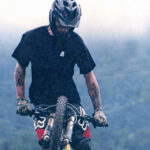
Rick Henderson, a long-time resident of Ngaruawahia, has spent much of his adult life creating and maintaining informal bike trails that generations of riders have come to know, use, and remember. What began as a personal passion for cycling gradually evolved into shared spaces that welcomed both professional riders and local kids, many of whom are now adults with families of their own.
Some may remember the bike track down the old Taupiri Road — a place where local riders mixed with visiting professionals, where skills were developed, friendships formed, and confidence built. Although the track has long since returned to the earth, the memories it created remain firmly embedded in the community’s collective history.
Less visible, but equally significant, are the trails Rick built by hand more than 25 years ago in the hills beyond the water treatment plant. Using little more than basic tools and determination, he carved out short riding lines and connected sections of land to create accessible spaces for mountain biking. These trails were never intended to be grand or commercial. They were simply a way to share the joy of riding and to encourage younger people to take up the sport.
That philosophy of openness extended beyond the trails themselves. Riders from out of town were welcomed, tents were pitched on lawns during weekend sessions, and the property became a gathering place for people drawn together by a shared love of bikes. Local riders on basic, entry-level bikes rode alongside experienced cyclists with high-end equipment, breaking down barriers that often exist in organised sport.
Out of this environment grew High Speed Cycles, a small bike workshop established by Rick. The shop was not only a place to purchase parts or service bikes, but a means of sustaining the trails themselves. Any income helped maintain the land and riding areas, which always remained free to use. Almost all trail work was completed by hand, with Rick doing the bulk of the labour in the early years before others joined in to help maintain and develop new features.
The property also became a base for wider riding activity in the region, including downhill sessions connected to trails built by Hamilton riders in nearby forest areas. These weekends brought together young riders, families, and enthusiasts who shared not just the sport, but a sense of belonging.
At one point, Rick attempted to take this civic-minded approach further, engaging with council staff to propose public bike trails in the hills above Ngaruawahia. He offered the support of dozens of local riders to build and maintain the tracks and to take responsibility for safety and upkeep. Although the proposal did not proceed, the idea reflected a vision that has since become common in communities worldwide, where cycling trails are recognised as valuable social and economic assets.
After several years away from riding due to illness, Rick has recently returned to the hills, clearing old trails and reopening sections for use. He is once again a familiar sight, pushing his downhill bike uphill before enjoying the short but rewarding ride back down.
Reflecting on his efforts, Rick remains modest. He does not view his contribution as anything extraordinary, but rather as the natural outcome of sharing a passion and having the opportunity to act on it.
In a time when community spaces are often measured by budgets and formal plans, his story is a reminder that some of the most meaningful places are created quietly — shaped by individuals who care deeply about where they live and who choose to give something back, simply because they can.