A
plan to improve Lake Waikare and the Whangamarino has been two years in the making, and its outcome was revealed at a series of meetings around the catchment, culminating in Te Kauwhata for the final meeting.
As with the two previous meetings, it was- as rugby players are fond of saying – a game of two halves, in which the muddy waters of Lake Waikare did not become any clearer by the end of the meeting despite there being general agreement on the desired outcomes.
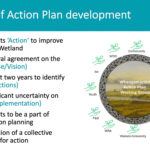
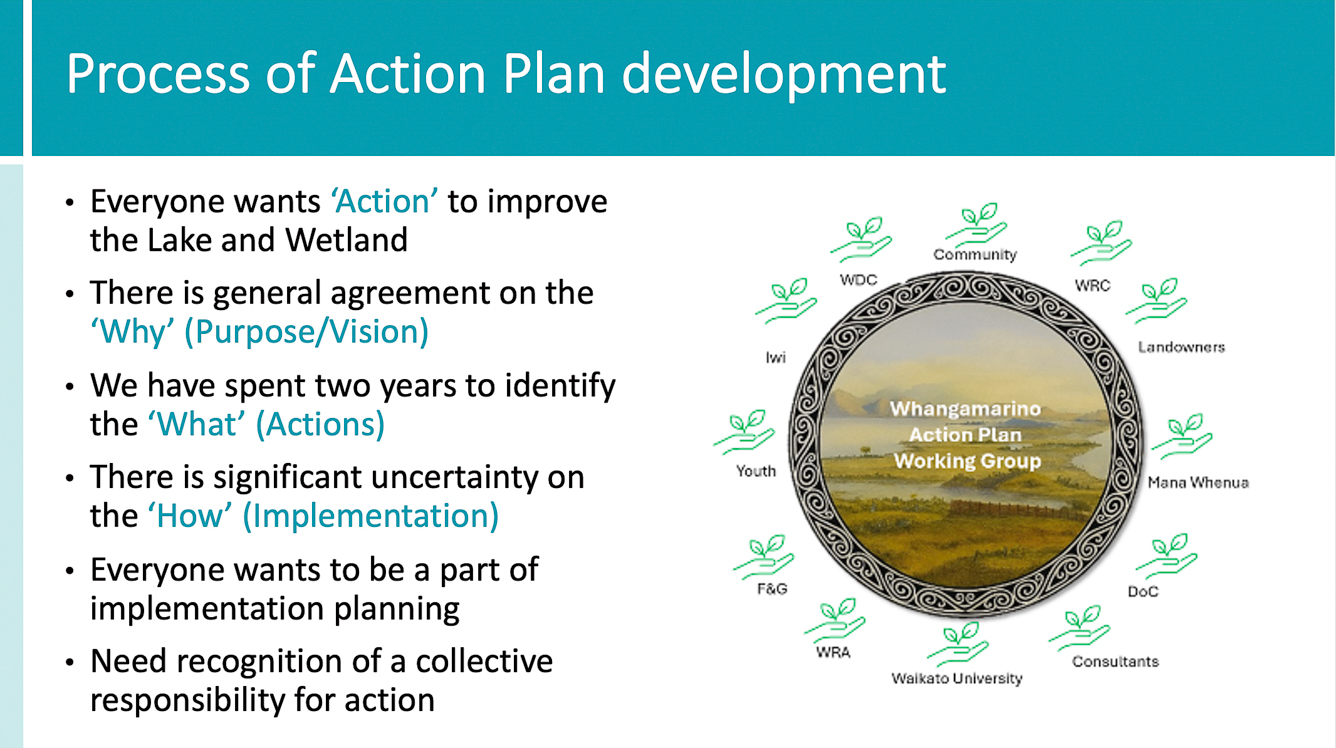
The plan was developed by a working group specifically established to represent all elements of catchment communities. It comprised local community members and representatives from the rural community and mana whenua as well as organisations such Fish and Game, DoC and staff and elected members of the regional council.
Workshops drilled down into specifics such as hydrology (water flow), koi, sediment and nitrogen and phosphate management and environmental and cultural aspects. The one single goal was to identify actions that would make a significant difference to the lake and wetlands for future generations.
The conclusions the working group landed on ranged from big-picture transformational (redesigning water level controls, koi control and sediment and nutrient issue) through to more immediate local actions with cumulative benefits such as riparian planting, removing fish barriers, sediment trapping and programmes addressing pest plant and predators.
The rural community again turned out in force at the public meetings, arguing that the plan should be deferred until their requests for technical investigations and assessments had been completed.
Farmers’ concerns included balancing flood control against environmental costs to the lake and wetland; wanting the council to commission independent engineering advice on flushing the lake, on the performance of the weir, to seek central government participation and manage koi before committing to the plan.
However, many were of the opinion that delaying the plan meant no action will be possible. Waikato Regional Council Principal Technical Lead and Chair of Working Group, Mike Scarsbrook told the meeting that if any actions or investigations were to be carried out, they would need to be funded; and for that funding to be allocated, it needed to be put forward in the council’s upcoming Long-Term Plan.
If the call for the plan to be delayed is adopted by the Regional Council, then it is unlikely that any funding can be allocated by the council.
And as Waikato Regional Council ceases to exist in 2028, the amalgamated new councils are unlikely to focus on this as a priority for some time as they will be working on the amalgamation of a number of councils into a single entity. (The amalgamation of the Franklin District into the Waikato District Council took around 10 years to complete)
In summary, there was a resounding ‘yes’ to the desire to start the process of rehabilitating Lake Waikare and the Whangamarino wetlands. The detail of how, who and who pays – as well as when any action might be contemplated- is yet to be decided.
At the time of going to print, the Regional Council had not met to consider the plan.
Meanwhile, Conservation Minister Tama Potaka has announced $2 million over two years to protect and restore the Whangamarino wetland.
Funded by the International Visitor Levy (IVL), the allocation will kickstart the Whangamarino Action Plan. DoC will collaborate with local iwi, regional council, and stakeholders to improve water management and biodiversity conservation across the 7,000-hectare habitat
By Chris Davies