Spring arrived with September, temperatures started to rise and blossoms appeared on our fruit trees. Gardeners now look forward to growing the summer vegetables, especially the tomatoes cucumber and capsicum.
In the first week of spring we sat in our shelter and started putting seeds into potting mix in plastic punnets. These are now being watered and kept in a warm place to begin the germination process.
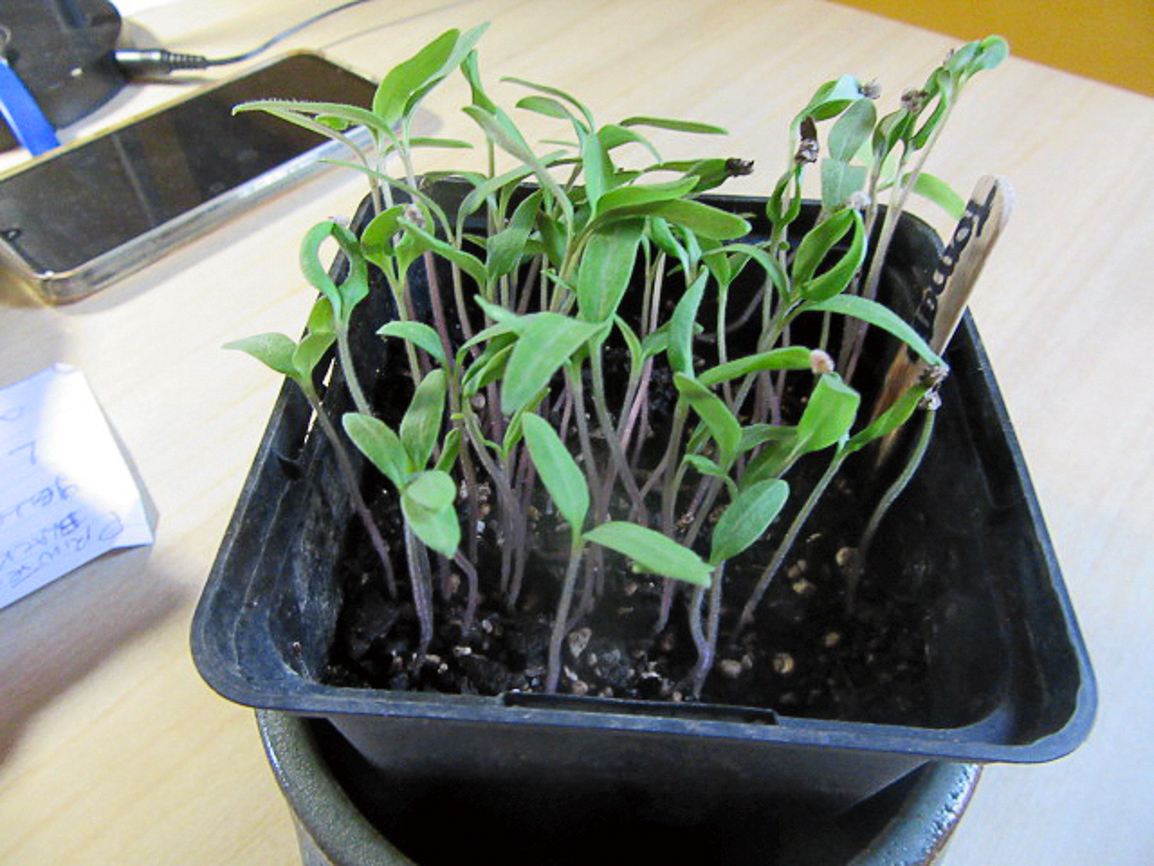
The tiny seeds are sown into potting or seed raising mix so that they grow into dense little forests. Stems and leaves grow up into the air and roots grow downwards into the mix that resembles soil. When the plants have grown about four or more little leaves and the stems look quite firm, they are gently prised from the punnet and transferred to individual pots. The plant stems must not be touched as they can be easily damaged and then the plant dies.
It is a good idea to learn how to grow plants from seeds and save money. Plants that are grown for you are expensive, and the investment can be easily lost. In the garden, plants are at risk of being eaten by insects and small animals such as snails. Little plants can also be flicked out of the soil by birds and cats, or killed by sudden blasts of cold weather. If you lose your little plants you can easily take out more seeds from the pack and resow. One pack of seeds contains many potential plants, and can be shared amongst friends.
Another reason to learn to grow your own seedlings is that there are a lot of different varieties of very tasty foods that are not always readily available in the supermarket. Seeds are shared amongst gardeners with tips and preferences. These days public libraries also collect and distribute seeds. Te Kauwhata Community Garden collects seeds from its crops and gives them away free. By doing this we are fulfilling one of the objectives of the garden… for people to have free and healthy food grown in their own homes and the community, and to enjoy the produce available through the Pataka Kai.