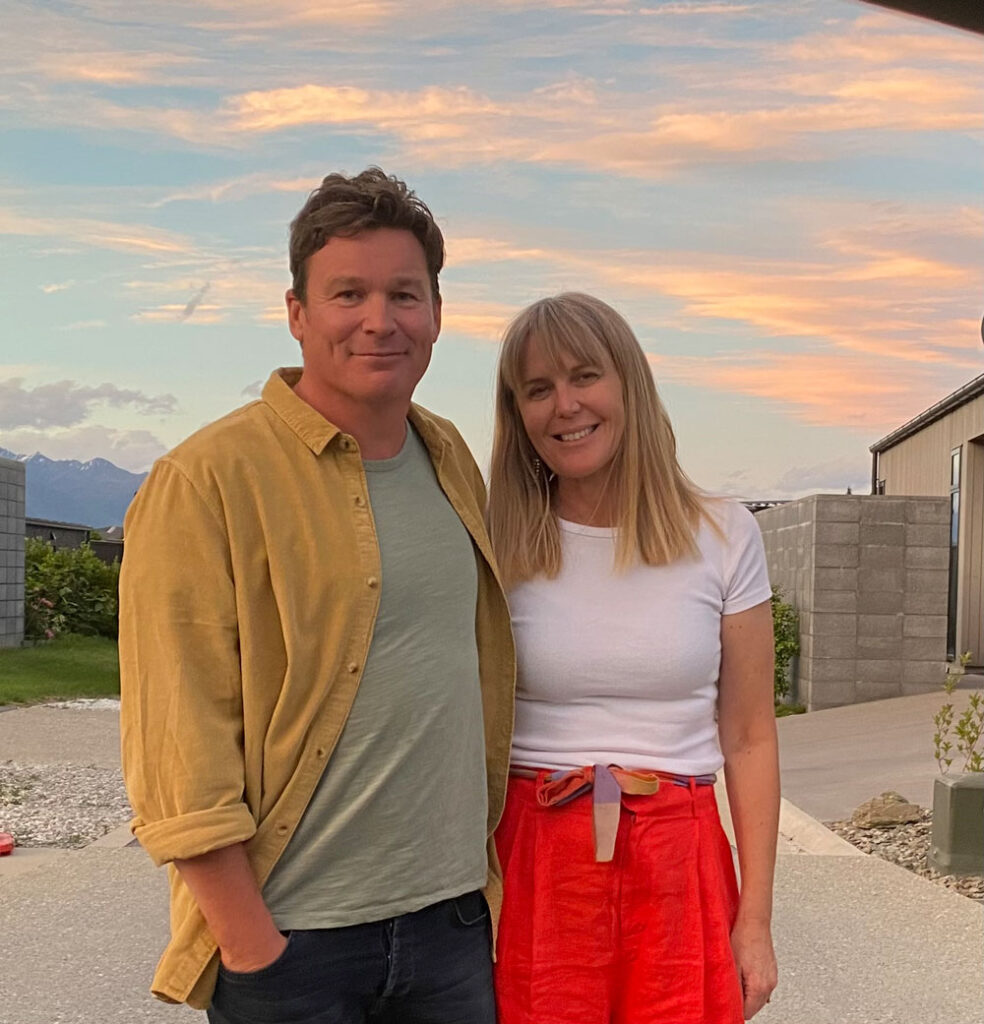
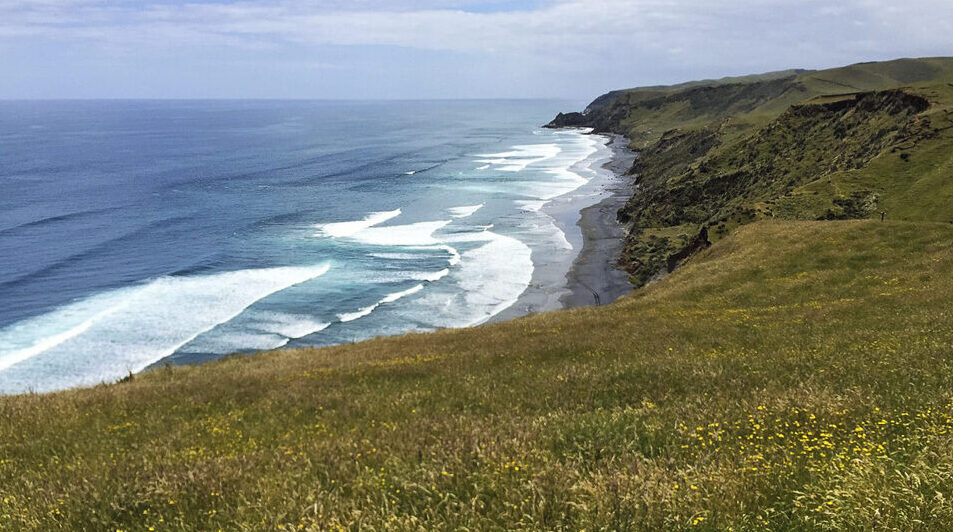
With a sweeping hill-country farm that runs all the way down to the Tasman Sea, Bronwyn Main is part of the fabric of rural North Waikato.
She and her husband farm sheep and beef on 700 hectares north of Raglan. Bronwyn shares what farming looks like in Te Akau, and how sustainability shapes their operation, as well as her involvement in community leadership through Rural Women New Zealand (RWNZ).
Can you tell us a bit about your farm and what you enjoy most about your work?
We farm around 700 hectares in Te Akau, about ten kilometres north of Raglan. Ours is a coastal, hill-country farm focused mainly on producing heavy lambs for the US market and finishing beef steers (editor’s note: “Finishing” means growing stock to a healthy, market-ready weight). The land is very rolling and exposed to the Tasman, so we often get all four seasons in a single day.
From the house, we can look right down a long valley and across the farm so there is always something happening: stock moving, or just the light shifting across the hills. It is a beautiful place to work each day.
What sustainable or good-practice habits are part of your everyday farming routine?
Sustainability is woven into everything we do. Our farm is GAP (Good Agricultural Practices) certified, which means it meets international standards for environmental care and food safety, which is a requirement for exporting heavy lamb into the USA. We are also certified through ZQRX, which is a global accreditation that recognises wool grown with a focus on environmental stewardship, biodiversity, animal care and community wellbeing.
A few years ago, we were category winners in the Ballance Farm Environment Awards, which showcase farms that are leading the way in sustainable land management. That recognition meant a lot, because it reflected years of careful decisions to look after the soil, the water and the wider environment.
Are there any tools, ideas, or small innovations that have made farm life easier or more enjoyable lately?
We were early adopters of finishing lambs on crops, which helps them reach prime condition more efficiently. Our river flats have pure clover swards, which is incredibly nutritious for stock. That has been a real game-changer for growing healthy lambs.
We also move stock frequently so they are always on the best feed and the land gets time to rest. It is a simple idea but makes a huge difference to animal health and pasture quality.
Beyond the farm systems themselves, we have always invested in great relationships with stock agents, vets, suppliers, our accountant, and our staff. Farming is easier and far more enjoyable when you have people around you who treat your place with the same care you do.
What do you find most rewarding about farming in the Waikato community?
Te Akau is a very special community. Being part of it has been a big part of my life: I have served on the local school board and was once a district councillor. Strong rural communities are vital, both socially and for the resilience of farming.
We have been lucky to have exceptional staff who take pride in the farm as if it were their own. And of course, the landscape itself keeps you grounded. There is a raw, rugged beauty, especially down at the beach end of the property that never gets old.
As a Board Member of Rural Women New Zealand, what are some things you are most passionate about in your work?
Rural Women New Zealand connects smart, rural women from all kinds of backgrounds far more diverse than many people realise. This year marks 100 years of RWNZ, and I’m Chair of the National Centennial Committee, which has coordinated celebrations from July 2024 through to June 2025.
My policy area on the board is Rural Health, and that is something I’m deeply passionate about. We are seeing real progress in expanding access to healthcare for rural communities, especially through tele-health. There is so much potential to make rural health services more accessible for everyone.
How do you see RWNZ supporting and uplifting rural people in North Waikato?
Across New Zealand, including North Waikato, you’ll find groups of rural women gathering for friendship, and support. One of our most successful recent initiatives has been Dinner Groups, where women can meet over dinner often with a guest speaker, and come away feeling more connected and empowered.
We are looking to provide communication, connectivity and engagement among rural women and their communities. For many members, involvement is intergenerational. My own mother joined in 1942, so being part of RWNZ feels like continuing her legacy.
What keeps you inspired in your community roles and in rural life in general?
I’m a can-do person who likes to keep busy. I believe the best thing you can give anyone is your time, and I try to pay it forward wherever I can.
Outside of farming and RWNZ, I’m also an International Cat Judge, usually judging eight to ten times a year, half in New Zealand and half in Australia. We are parents to four very spoiled Burmese cats who keep life interesting.
with Annika Stricker