There is a lot of work happening now to sort through the ideas that have been suggested and identify which ones will make the greatest difference for the lake and wetland. The action plan is the first step – we need to get all the required actions into this plan, and then begin developing the business cases.
Why does it need to be done this way?
The impacts on our waterways have come from many sources, most of them tied to our nation’s economic growth. Our local environment has carried the cost, and addressing those impacts is simply too great a burden for our community to shoulder alone. We will need support from Central Government, which means the actions and the business cases must be carefully assessed and well developed. Only then will we know what help is needed and in what form – whether funding, legislative change, long-term master planning, or new infrastructure and engineering solutions.
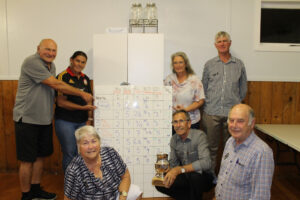
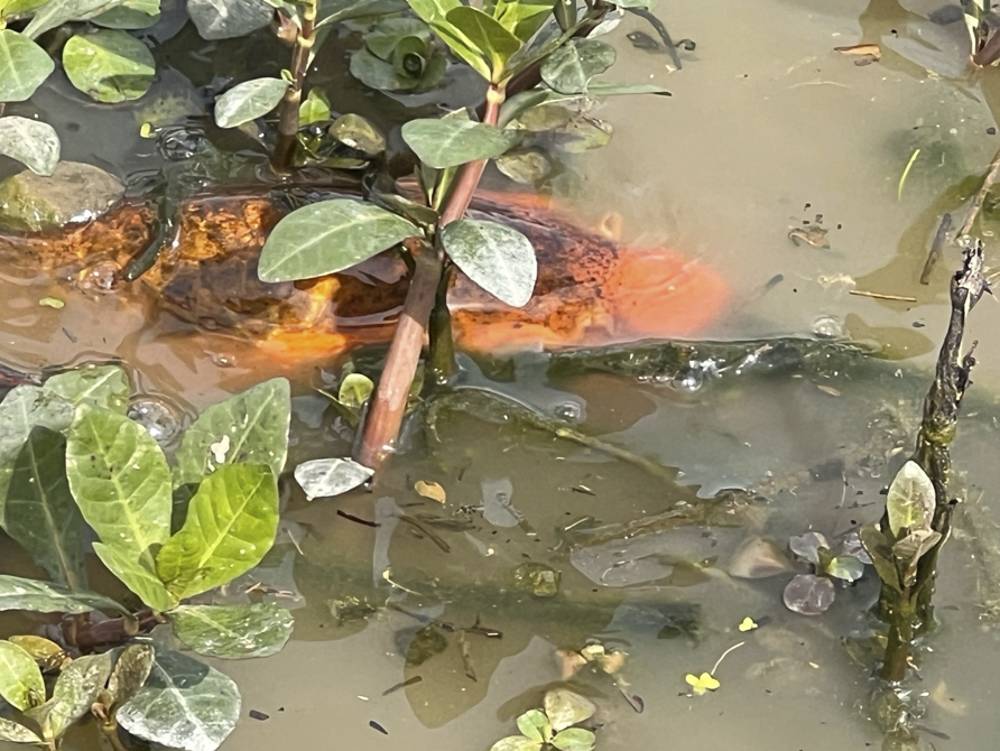
If you’ve been following the work that has been going on in and around Te Kauwhata, you’ll know that on the 18th of October we had a workshop on Koi and water quality. The issues are integrated into a feedback loop that is hard to break out of. There were 30 participants throughout the day and a hard core of 16 stuck it out right to the end. We had some great information and desires come out of the work. The priority for those present was to change the rules for commercial koi fishing so that it was not so expensive to catch and deal with them. This will require a change in the legislation and probably where responsibility for koi sits.
Our new Buildlink team are really keen to sponsor more fishing competitions for our community. These would complement those already underway such as the Bow fishers and the Mud Marlin competitions. Are you keen for more and would you be prepared to help?
Other ideas were put forward many have been explored in the past but never gone further. Some will be explored a bit more when we look at our next topic. All the others will be looked at again through this process and some are likely to go to the next steps.
We’re now at the really big issue – the flood scheme and water levels of both the lake and wetland.
This is an issue that will result in some trade-offs – meaning we can have this, or that, but we’re unlikely to have both, depending on what we value most and what central Government is prepared to help with.
There has been a lot of research into what has happened to the lake and wetland system due to the 1960’s flood scheme being developed. If you’re a local you’ll know that the scheme changed the way water flows in and out of the lake, lowered the lake level by 1m and put an outlet from the lake at the north-eastern corner. (Drop into the Te Kauwhata library to see posters that give more information about what’s happened to the lake and wetland over the years, and a map of all the restoration work that landowners have undertaken with help from WRC and WRA).
The lowering of the lake’s water level has resulted in wind driven waves having a significant effect on sediment suspension within the lake and erosion especially along the eastern shoreline. What difference does sediment suspension make to the lake’s ability to support native species? Firstly, it means that aquatic plants that used to thrive in the lake no longer survive as there is too little light making to the bed of the lake. It also means that our freshwater natives that need clear water with low nutrients (nitrogen and phosphorous concentrations) really struggle to find a home either in the lake or the wetland. Tuna can live in lower quality water, but they don’t necessarily thrive when it is as impacted as both our water bodies are now.
What could make a difference to the lake and wetland now?
Whatever is decided will need very careful planning and implementation to ensure that the unintended consequences are minimised and the trade-offs and costs, clearly understood.
Increasing the depth of the lake would reduce the amount of wind generated waves. The depth could be increased either by raising the lake level or removing sediment from the lakebed. Are there other ways you can think of?
It is possible to manage the flood scheme in more dynamic manner, so that the lake level was kept higher for longer and lowered only when flood flows were expected. This along with a permanent raising of the lake level would result in more lake margin inundation, which may in turn result in more koi habitat.
Flushing the lake to remove accumulated sediment, means the sediment stays within the river system and must end up somewhere, the most likely place at this time is the wetland. Flushing it from the wetland means it goes into the Waikato awa/river.
Dredging the lake removes the sediment from the water and could enable it to be used on farmland within the catchment, it is high in nutrients so it might be a win/win situation. But it is likely to be expensive take a few years and there would be a need to “turn off” the sediment taps, the Matahuru and other streams that enter the lake.
A final bit of food for thought is should we consider removing the flood scheme altogether and reinstating a natural water flow? There are a lot of questions that would need to be addressed – what would the impact be? How long would it take to stabilise? And many more. Something as big as this would be a very long-term plan.
I’ll try to explore this topic a bit more in January/February and run one or two workshops to discuss it with you all in February. (I’d hoped to do one before the end of the year, but can’t make it work). So, I’ll wish you all a very Merry and SAFE Christmas and Happy New Year dreaming of a time when we can go swimming in our lake. – may be 50 years from now, hopefully sooner.
by Liz Tupuhi